GET NEW FREE PRINTABLES BY EMAIL. SIGN UP FOR THE PRINTABLES NEWSLETTER.
- Home
- Craft Business
- Display Booth Photos
- Art Show Display Ideas
Art Show Display Ideas That Attract Buyers and Boost Sales
Explore practical ways to display paintings and prints using grid walls, easels, shutters, shelves, picture ledges, browsing stands, and wooden crates.
HERO IMAGE
If you're preparing for an art show, one thing matters more than almost anything else: How you display your work.
A strong display doesn't just look nice. A strong display:
- Stops people in their tracks
- Draws them into your booth
- Makes your art feel more valuable
- Helps you sell more
The goal is not simply to attract more people, but to appeal to shoppers who are most likely to connect with your work. Learn how to create an art show display that attracts the right customers.
Below, you'll find practical, real-world art show display ideas, along with tips on what actually works, what to avoid, and how to choose the right setup for your situation.
How Do You Set Up an Art Fair Booth?
There are plenty of options. You can hang paintings on grid walls, make DIY display panels with shutters, or use a sturdy easel to feature one special painting.
Small and mid-sized pieces can stand out on shelves or picture ledges. Display stands, boxes, and crates work well when you want shoppers to browse through prints.
Quick Answer: Grid walls are a flexible choice for several framed paintings. Use an easel for one featured piece, and use crates or browsing stands for unframed prints. At outdoor shows, every display must be secured to support the weight of the artwork and expected weather.
For a closer look at hanging, positioning, and arranging original artwork, see this complete guide to how to display paintings at an art show.
For a broader look at tents, tables, signage, storage, and customer flow, explore these additional craft show set up ideas.
Art Display Comparison
Display
Best for
Portability
Cost
Exterior panels
Large attention-getting work
Moderate
Moderate
Easel
One featured painting
High
Low to moderate
Grid walls
Several framed works
Moderate
Moderate
Shutters
Small lightweight art
Moderate
Low to moderate
Shelves
Small paintings and prints
Moderate
Moderate
Print crates
Unframed prints
High
Low
Best for large paintings: Grid walls, sturdy panels, or one strong featured easel.
Best for unframed prints: Browsing stands, boxes, or wooden crates.
Best for a small vehicle: Folding easels, narrow ledges, and compact print bins.
Best for a small budget: Repurposed shutters, crates, and simple shelves.
10 Art Show Display Ideas and Photos
Check out the art show display ideas below to see a real-world booth photo, best use, advantages, limitations, and setup advice.
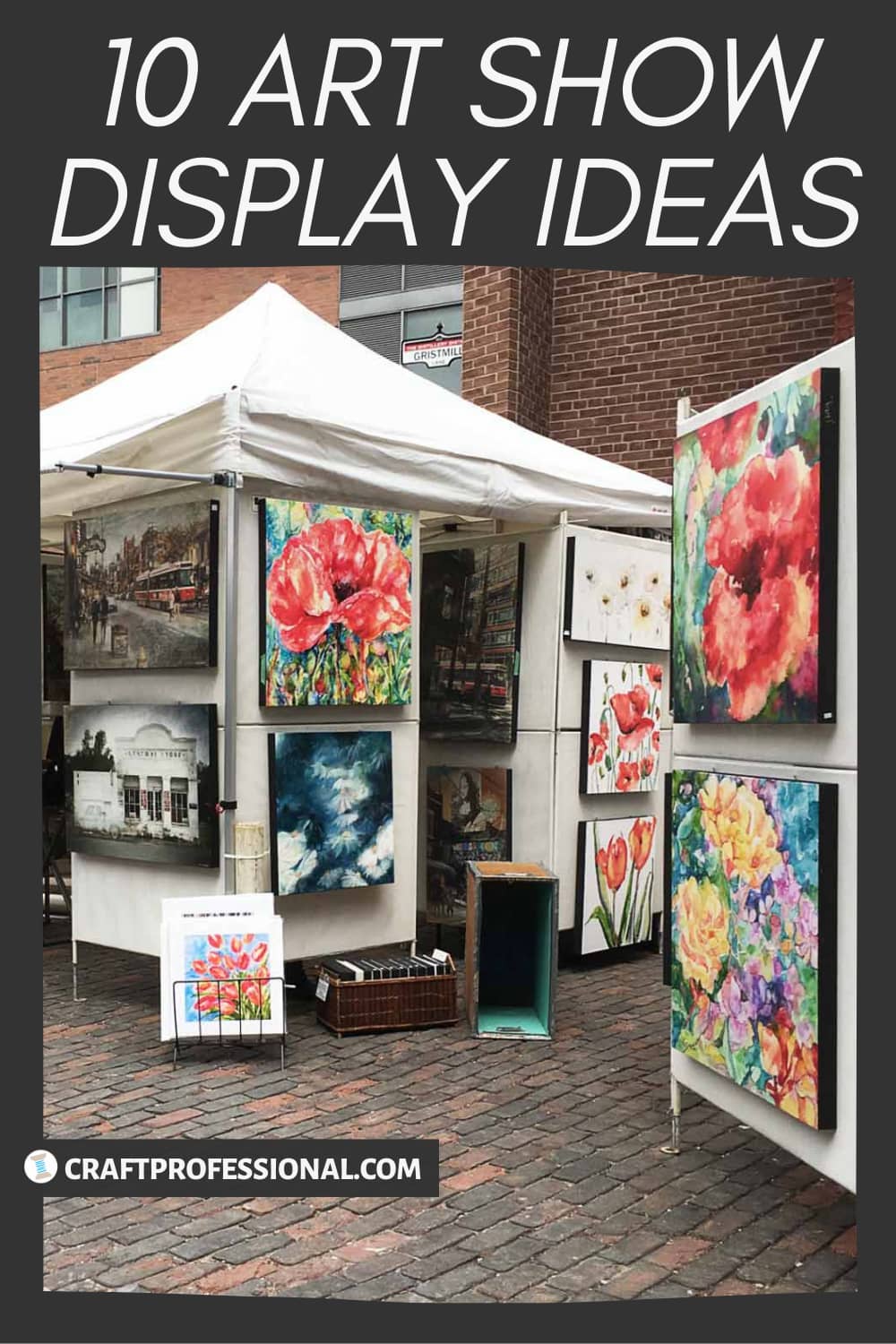
1. Display Paintings Outside Your Booth
Use one bold piece to attract attention from farther down the aisle.
The booth pictured here absolutely stood out in a sea of displays at a busy outdoor show I attended. The colorful floral paintings were eye-catching and drew shoppers' attention from a distance.
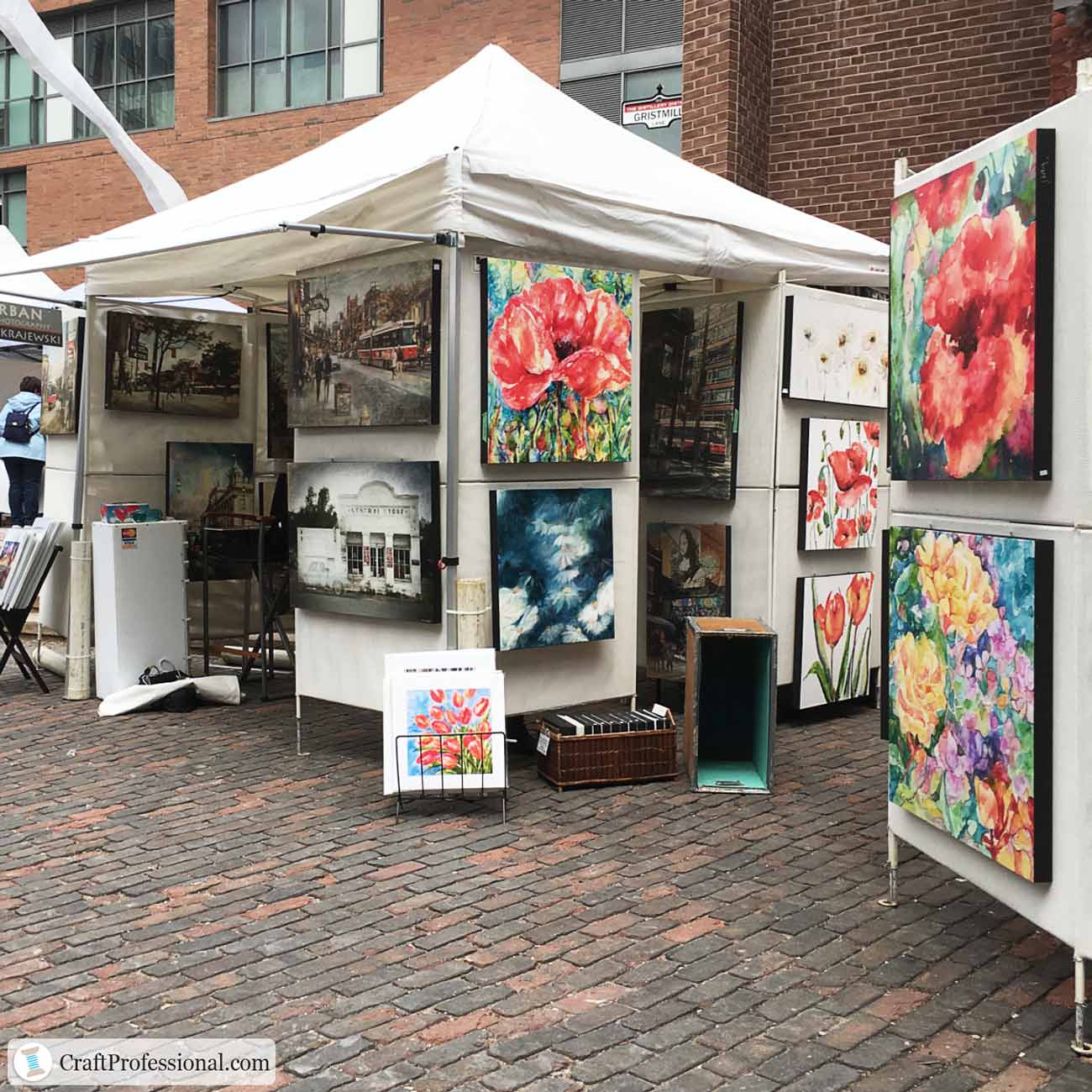
Best for Large Art
Strong Visibility
Organizer Approval
Try this: Use the outside-facing painting as the visual anchor for the entire booth.
Displaying paintings on the outside of your booth can help your work get noticed before shoppers reach your space.
Choose one painting with strong color, contrast, or an unusual subject. Hang it from the outside of your portable tent. Put up your sidewalls for best effect.
Many shows provide a 10×10-foot booth, but dimensions and rules vary. Get permission before placing anything outside your assigned footprint.
Review common art booth regulations before planning exterior displays, canopy attachments, signage, lighting, or anything that extends beyond your assigned space.
2. Feature a Painting on an Easel
Highlight one special piece near the entrance.
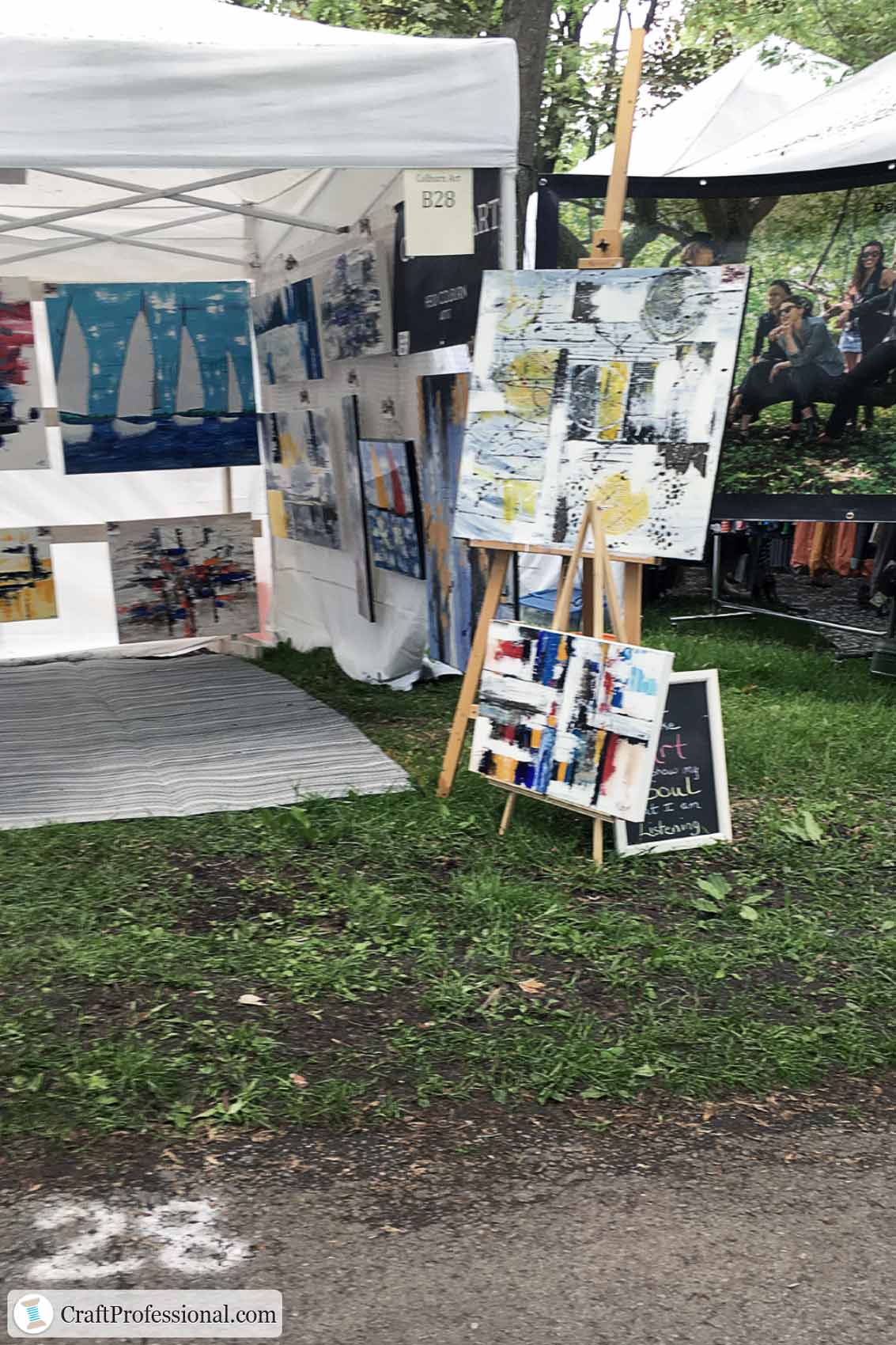
One Featured Piece
Easy to Reposition
Stability Matters
Try this: Repeat one or two colors from the featured painting in your signs or smaller displays.
An art display easel is an easy way to make one painting the star of your display.
Place it near the entrance without blocking the walkway. At outdoor shows, use an easel sturdy enough for the painting, wind, uneven ground, and passing shoppers.
Don't underestimate wind. I've had a display that wasn't secured well almost take flight in the slightest breeze. Secure your displays well!
3. Hang Art on a Grid Wall
Display several framed pieces in a flexible arrangement.
Overcrowded small booths tend to push people away. The booths that feel open, like the one pictured below, almost always get more engagement.
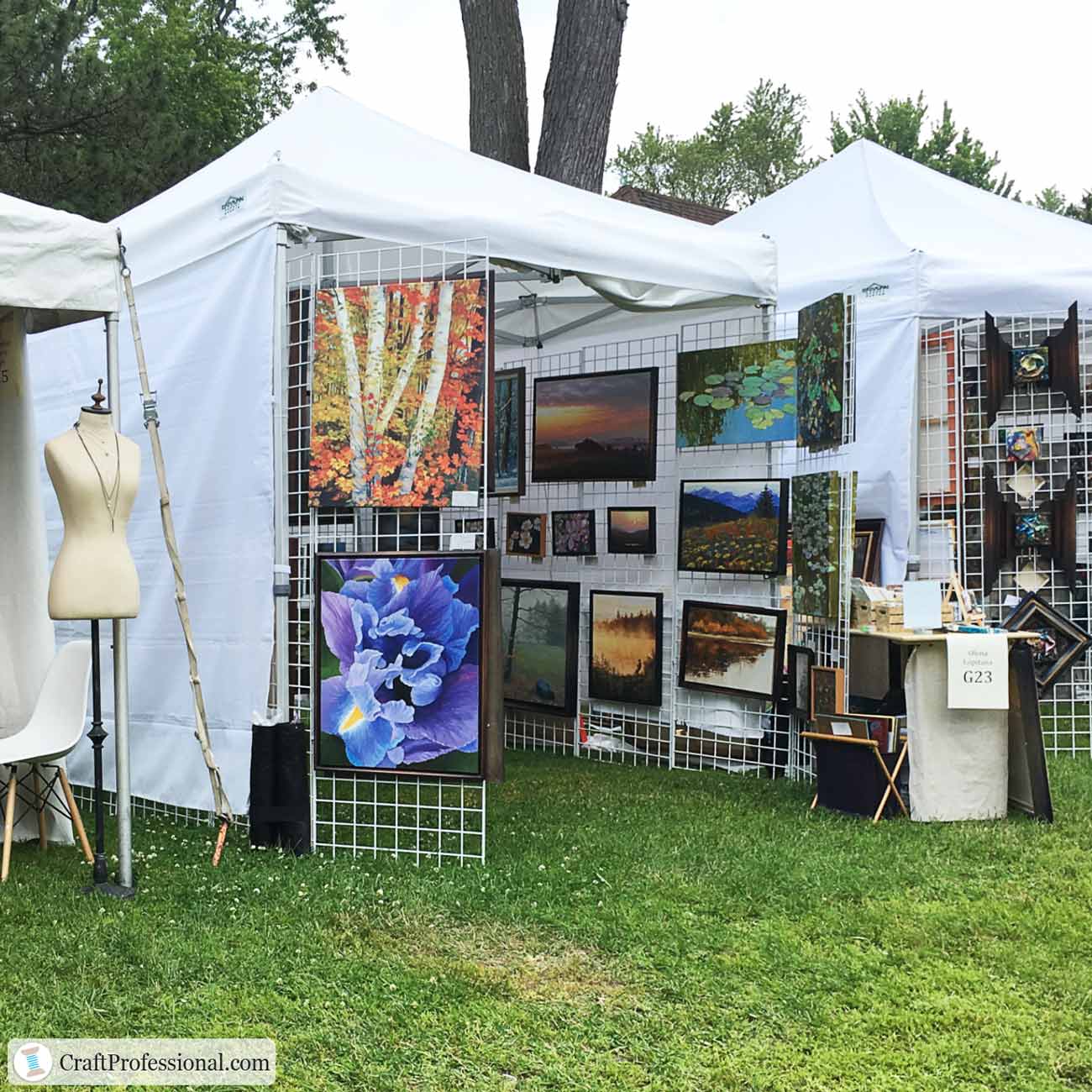
High Capacity
Framed Art
Moderate Transport
Try this: Repeat one or two colors from the featured painting in your signs or smaller displays.
Grid wall panels are flexible and work well when you have several framed paintings or canvases to hang.
- Place heavier work lower.
- Use hooks rated for the artwork.
- Leave space between pieces.
- Secure freestanding panels properly.
Do not assume your canopy frame can carry the entire display. Follow manufacturer guidance and show safety rules.
4. Make Display Panels With Shutters
Create a distinctive DIY background for smaller artwork.
Some of the most effective booths I've seen weren't expensive. They just used simple materials in a clean, thoughtful way, like the booth pictured below, which stayed busy with shoppers all day.
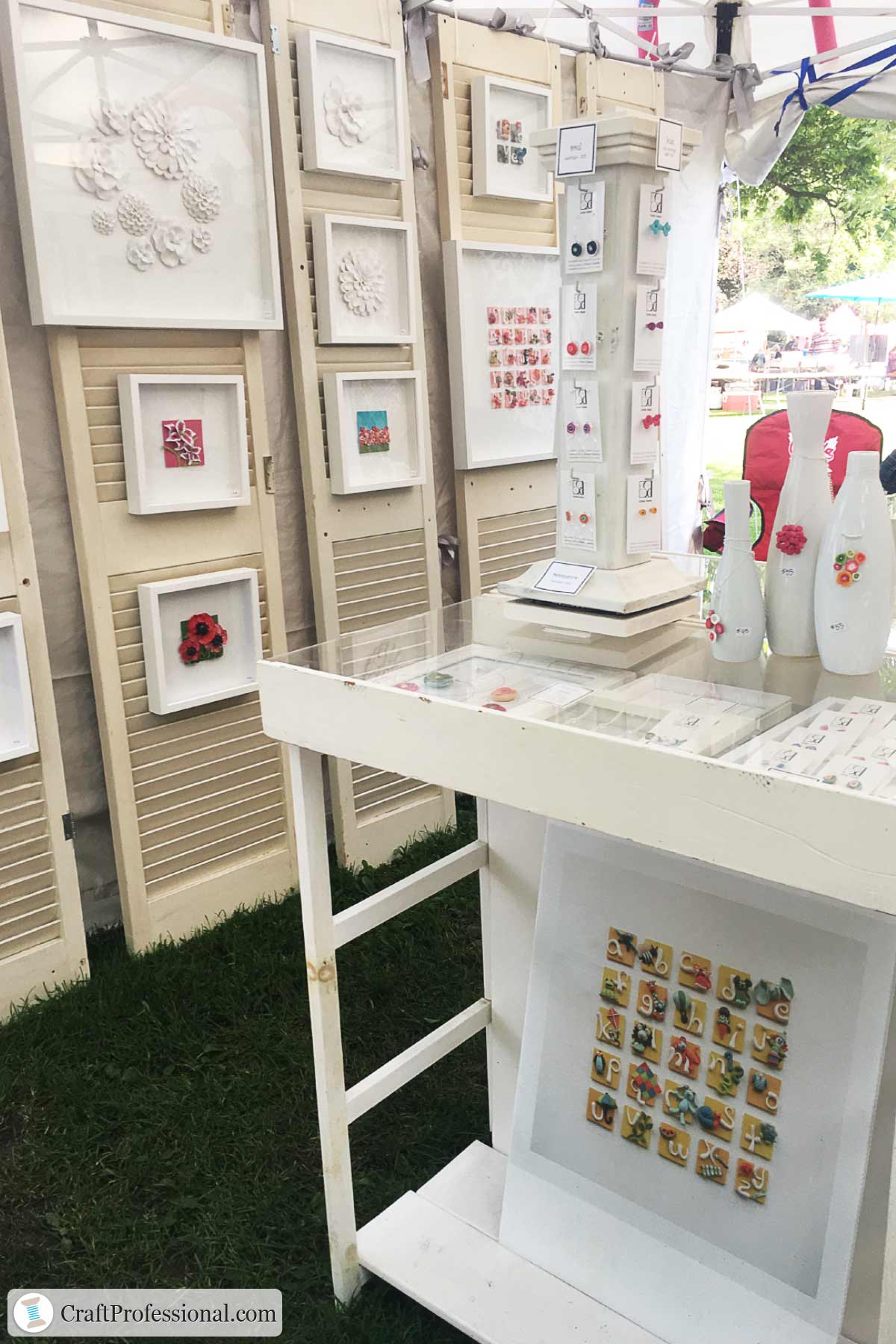
DIY Option
Small Artwork
Custom Color
Try this: Hinge two or three shutters together to create a folding screen that is easier to store and transport.
Shutters can make attractive panels for small, lightweight artwork.
Paint them white for a quiet background, or use a color that fits your branding. Test the full setup at home before the show.
5. Use Chain to Display Art
Create a compact hanging system when you do not have walls.
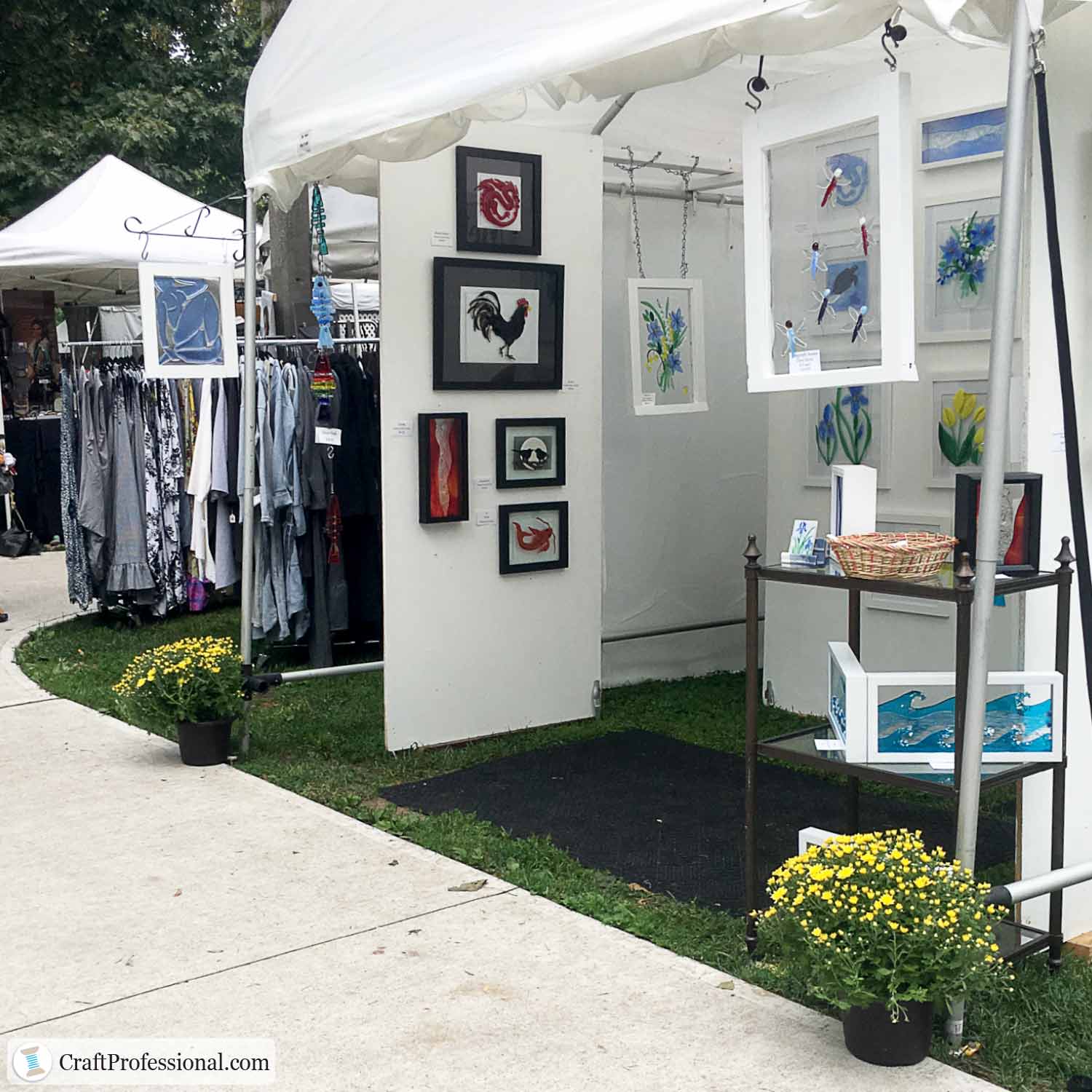
Low Cost
Lighter Weight Art Only
Test First
Chain can work when you need a compact, flexible display without permanent walls.
Avoid suspending work that's too heavy for your portable canopy frame. Confirm that your support structure and hardware are designed for the load.
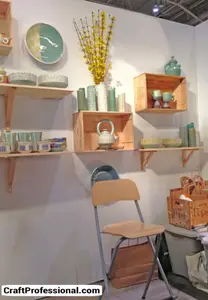
At outdoor shows, prevent artwork from swinging into other pieces or into shoppers.
6. Arrange Smaller Art on Shelves
Group small pieces into a stronger visual collection.
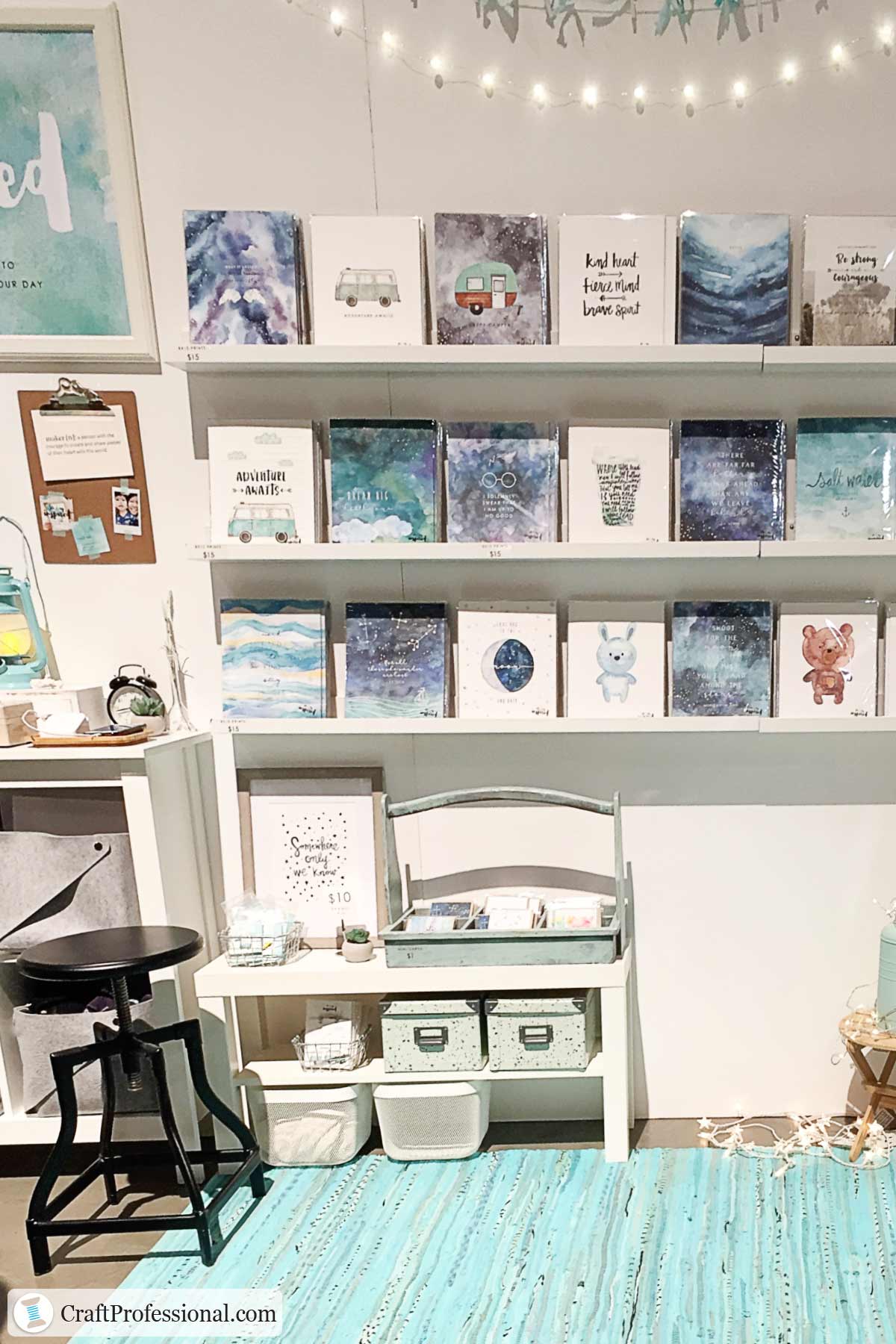
Small Framed Art
Easy Browsing
Avoid Clutter
Closely grouped, portable display shelves can turn several small pieces into one strong visual block.
- Group by color, subject, or series.
- Vary the height of the pieces.
- Leave some empty space.
- Keep fragile work away from edges.
7. Use Picture Ledges in Small Spaces
Display prints vertically without using much floor space.
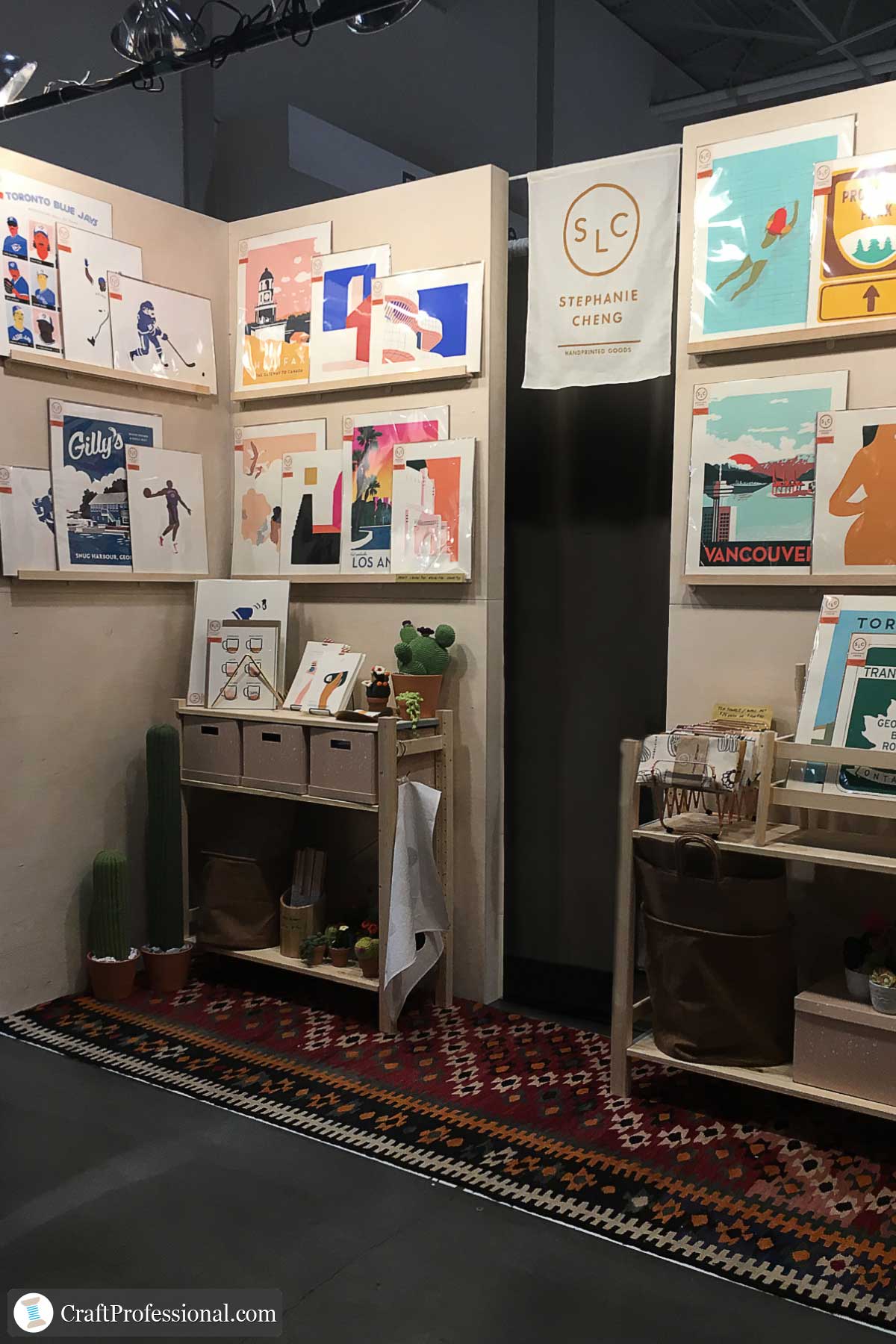
Narrow Booths
Small Framed Prints
Space Saving
Floating picture ledges work well when you do not have room for full-size shelving.
You can overlap frames slightly, but keep every piece visible and easy to remove. Empty space helps the arrangement feel intentional rather than crowded.
8. Add Browsing Stands
Encourage passing shoppers to stop and look through your work.
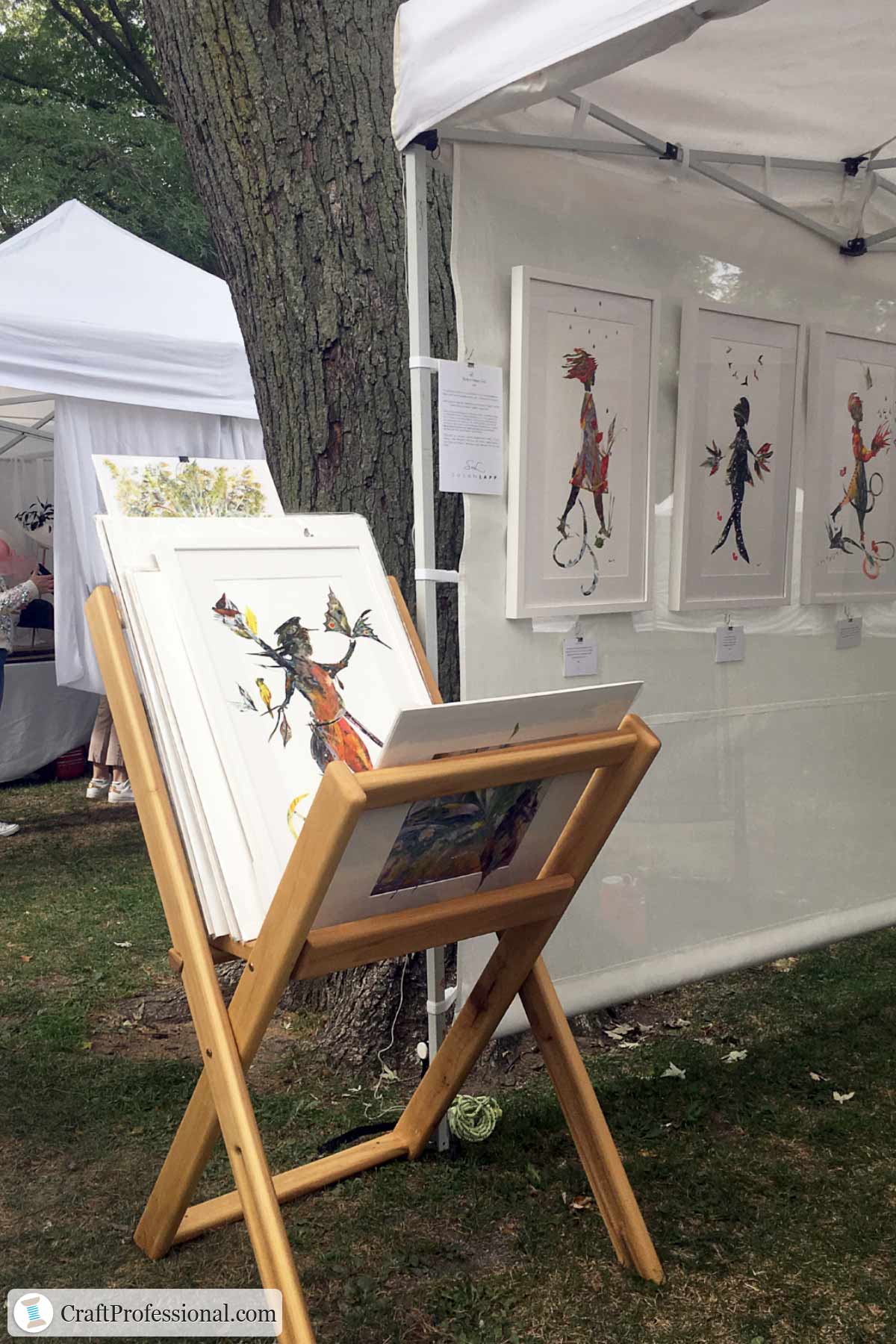
Invites Browsing
Prints or Small Art
Protect Customer Flow
Try this: Put one strong image at the front so shoppers immediately understand what they will find inside.
A painting display stand near the front corner of the booth can encourage shoppers to pause.
Place it where people can browse without blocking the entrance. Organize the work by size, subject, collection, or price.
A well-positioned display stand for art shows can encourage passing shoppers to pause and browse prints or smaller pieces.
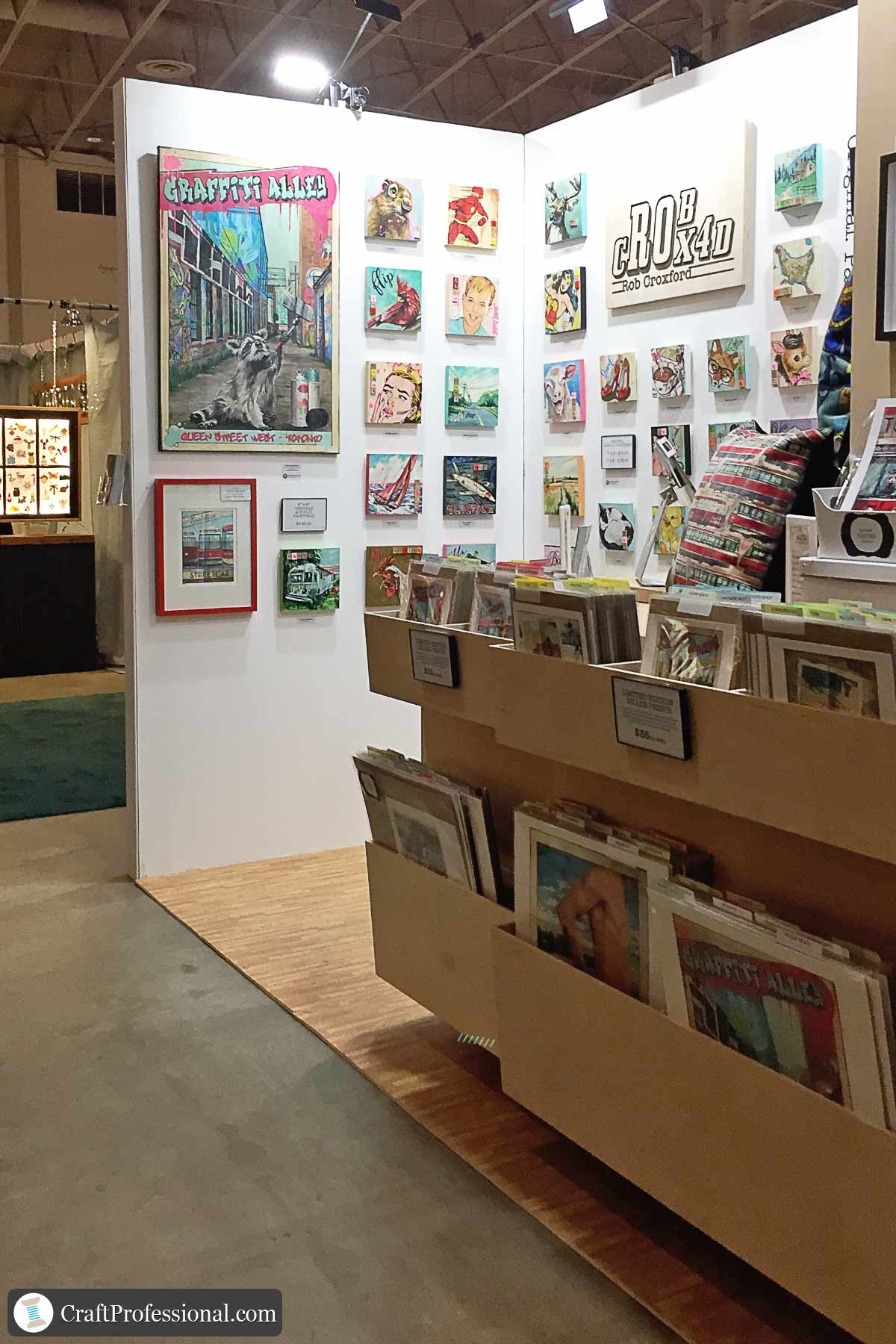
9. Display Prints in Boxes or Crates
Create an affordable, portable browsing system for unframed prints.
Unframed Prints
High Capacity
Low Cost
Wood crates are easy to transport and can hold a large number of prints.
Protect prints with sleeves and backing boards when appropriate. Avoid packing the crate so tightly that shoppers have to force the prints apart.
Use dividers to organize work by size, subject, series, or price.
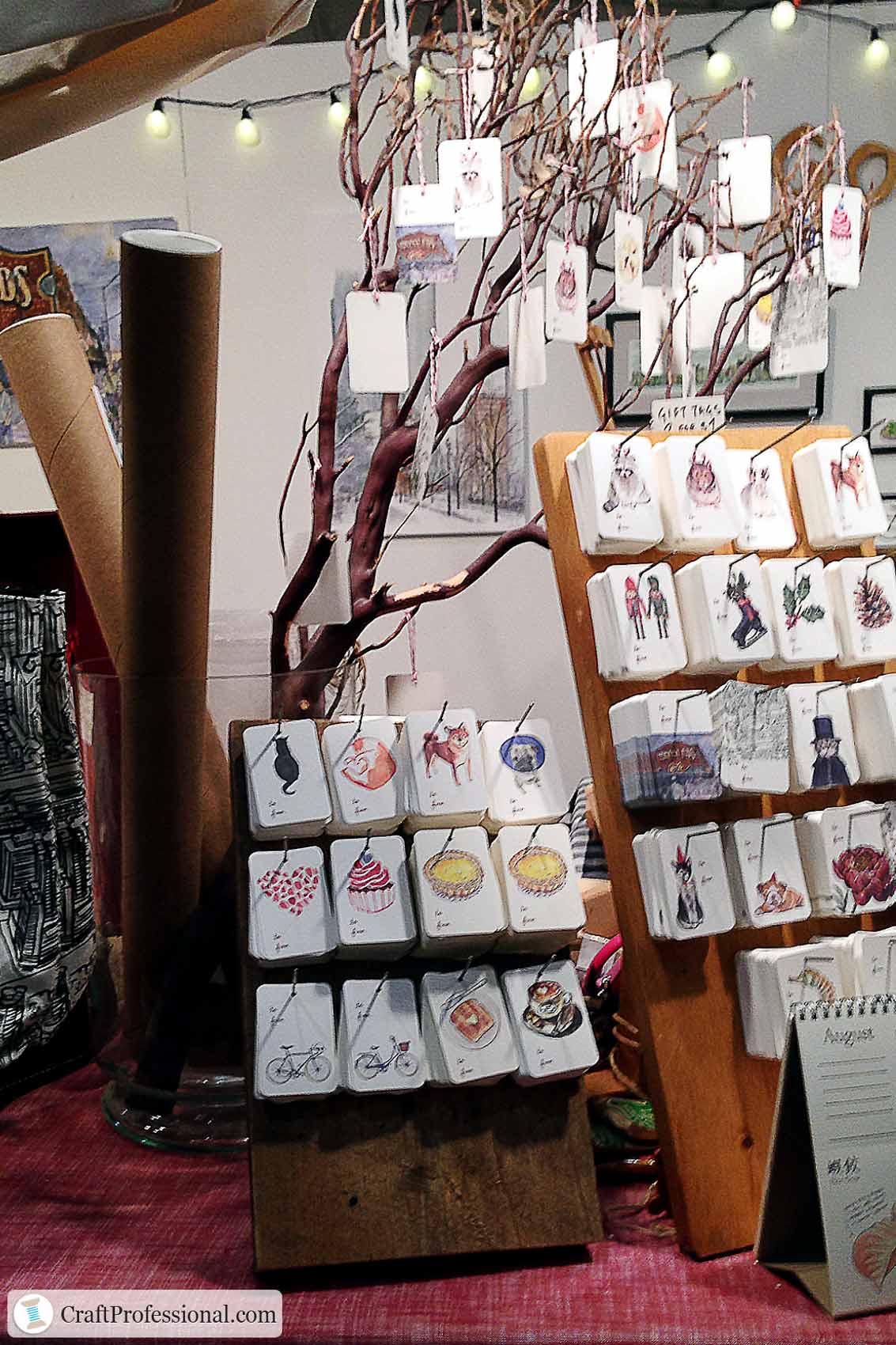
10. Offer Smaller Items Featuring Your Art
Give shoppers a lower-priced way to enjoy your work.
Multiple Price Points
Gift Items
Keep Art Primary
Cards, jewelry, bookmarks, magnets, and small prints can serve shoppers who love your work but need a lower-priced option.
Keep your original paintings visually important. Give smaller products a neat, dedicated area so your display booth does not begin to look like a general gift shop.
How to Create a Cohesive Art Show Booth
Choose one visual anchor. Use a large or especially striking piece near the entrance.
Lighting can strengthen that visual anchor and help colors, textures, and details stand out. Review these art show display lighting ideas before choosing fixtures for an indoor venue or an approved outdoor setup.
Group related work. Arrange pieces by collection, color, subject, size, or medium.
You can refine those groupings further by applying visual merchandising strategies for your craft booth, including focal points, repetition, balance, and clear product groupings.
Leave empty space. Do not fill every wall or shelf. Important pieces need room to stand out.
Make prices easy to find. Use neat labels that are visible without competing with the art.
Protect the entrance. Make sure shoppers can enter, turn, browse, and leave comfortably.
These craft booth designs and layouts can help you compare different ways to arrange walls, tables, browsing bins, and checkout areas.
Plan your checkout area. Leave room for payments, packaging, bags, sold items, and personal belongings.
Common Art Show Display Mistakes
Overfilling every wall: Leave enough space for individual pieces to stand out.
Blocking the entrance: Avoid placing large stands where they create a bottleneck.
Hiding prices: Make it easy for shoppers to understand what each piece costs.
Using unstable fixtures: Test easels, shelves, panels, and hanging hardware before the show.
Ignoring the weather: Plan for wind, rain, uneven ground, and a fast takedown.
Mixing too many styles: Use a small number of compatible display materials and colors.
Outdoor Art Show Safety Checklist
Outdoor shows require extra planning. Confirm the rules and test your complete setup before show day.
- Confirm the exact booth dimensions.
- Review organizer requirements.
- Check canopy weight rules.
- Confirm display load limits.
- Secure freestanding panels.
- Place heavier artwork lower.
- Prepare for wind and rain.
- Keep aisles and entrances clear.
- Protect framed and unframed work.
- Create an emergency takedown plan.
A secure booth protects your artwork, your customers, and neighboring exhibitors. Review these detailed craft booth display safety tips, then confirm the specific rules for each event.
Frequently Asked Questions
What is the best way to display paintings at an art show?
What is the best way to display paintings at an art show?
Grid wall panels are flexible when you need to hang several framed paintings. A sturdy easel works well for one featured piece. Choose according to artwork size, weight, booth space, transport needs, and venue.
How can you display artwork without walls?
How can you display artwork without walls?
You can use grid walls, freestanding shutters, easels, suitable chain systems, shelves, picture ledges, browsing stands, and crates. Make sure the method is appropriate for the weight of the art.
What is the cheapest way to display art at a fair?
What is the cheapest way to display art at a fair?
Wooden crates, secondhand shutters, simple easels, and repurposed shelves can be affordable. Make sure the display is still stable and suitable for your artwork.
How should prints be displayed?
How should prints be displayed?
Display unframed prints in crates, boxes, or browsing stands. Protect them with sleeves and backing boards when appropriate, and organize them by size, subject, series, or price.
How do you make an art booth look professional?
How do you make an art booth look professional?
Use a consistent background, limit fixture styles, group related artwork, keep prices visible, leave empty space, and make the booth easy to enter and browse.
Final Thoughts
The best art show display is not necessarily the most expensive or complicated one.
It is the display that suits your artwork, fits your space, travels well, sets up safely, attracts attention, and makes browsing easy.
Use these ideas as a starting point, then adjust them to suit your own work, show schedule, and customers.
One of my favorite ways to figure out what really works at an art show is to slow down and watch how people move through the booths.
I've spent hours standing back and noticing where people pause, what catches their eye, and which displays they walk right past without a second glance. After a while, patterns start to emerge, and it's often the small details in layout, lighting, and presentation that make the biggest difference.
More Craft Display Ideas
Craft Show Success
Craft show success hinges, in part, on bringing customers into your booth. Here are 9 strategies to entice customers into your booth.
Craft Show Display Ideas
Find craft show display ideas with three free and easy ways to find great booth photos that will give you inspiration to create your own great displays.
Craft Show Success Secrets - Merchandising
These craft show success secrets will help you use effective merchandising strategies to make the sale at your next craft show.


Hi, I'm Lisa, the creator of Craft Professional. I create all of the original images and printables on this site, including coloring pages, calendars, and other creative resources for kids, adults, teachers, and busy families. Learn more about the site and the person behind it.
 |
Enjoyed this page? Click the button to make CraftProfessional.com your preferred printables source on Google, so great coloring pages & planners are always a click away. |

Home | About | Contact | Newest Updates | Newsletter | Privacy | Terms of Use | Advertising Disclosure
If you buy something through links on Craft Professional, I may earn a referral fee. Details are in my disclosure.
Copyright © 2006-2026 CraftProfessional.com - All rights reserved.